
15º PERIFERIAS – Festival Internacional de Artes Performativas
15th PERIFERIAS – International Performative Arts Festival
DIA 8 DE MARÇO | 11H | Casa de Teatro de Sintra
8th OF MARCH | 11H | Sintra Theater House
De / From Teatro La Gotera de Lazotea
Teatro de Marionetas | M/3 | 60 Min.
Bilhetes à venda na Ticketline / Tickets for sale on Ticketline
5€/pax | público em geral / general public
A partir da estrutura da canção popular da pulga e do piolho, cria-se o espetáculo. A canção está dividida em estrofes, em cada uma das quais é introduzida uma personagem que, por sua vez, introduz uma canção ou um jogo no desenrolar do espetáculo.
A música nas nossas produções responde da mesma forma que nos
jogos infantis populares: é inseparável, é o elemento comunicativo do jogo que marca o ritmo; apoia e condiciona a coreografia; argumenta o jogo; caracteriza personagens; marca padrões, confere lirismo com as suas melodias e torna-o facilmente memorável.
De forma jocosa, a peça também não inventa um final feliz ao estilo Chim-pum, mas sim uma espécie de final aberto, ou adiado, que fala de forma saudável dos desejos insatisfeitos que se aprende a aceitar sem protestos ou frustração. Uma montagem que encanta as crianças e valoriza a tradição e a simplicidade.
____ . ____
The show is based on the structure of the popular song about fleas and lice. The song is divided into verses, each of which introduces a character who, in turn, introduces a song or a game as the show unfolds.
The music in our productions responds in the same way as in
popular children’s games: it is inseparable, it is the communicative element of the game that sets the pace; it supports and conditions the choreography; it argues the game; it characterizes characters; it sets patterns, confers lyricism with its melodies, and makes it easily memorable.
In a playful way, the play does not invent a Chim-pum-style happy ending, but rather a kind of open or postponed ending that speaks healthily of unfulfilled desires that one learns to accept without protest or frustration. A production that enchants children and values tradition and simplicity.
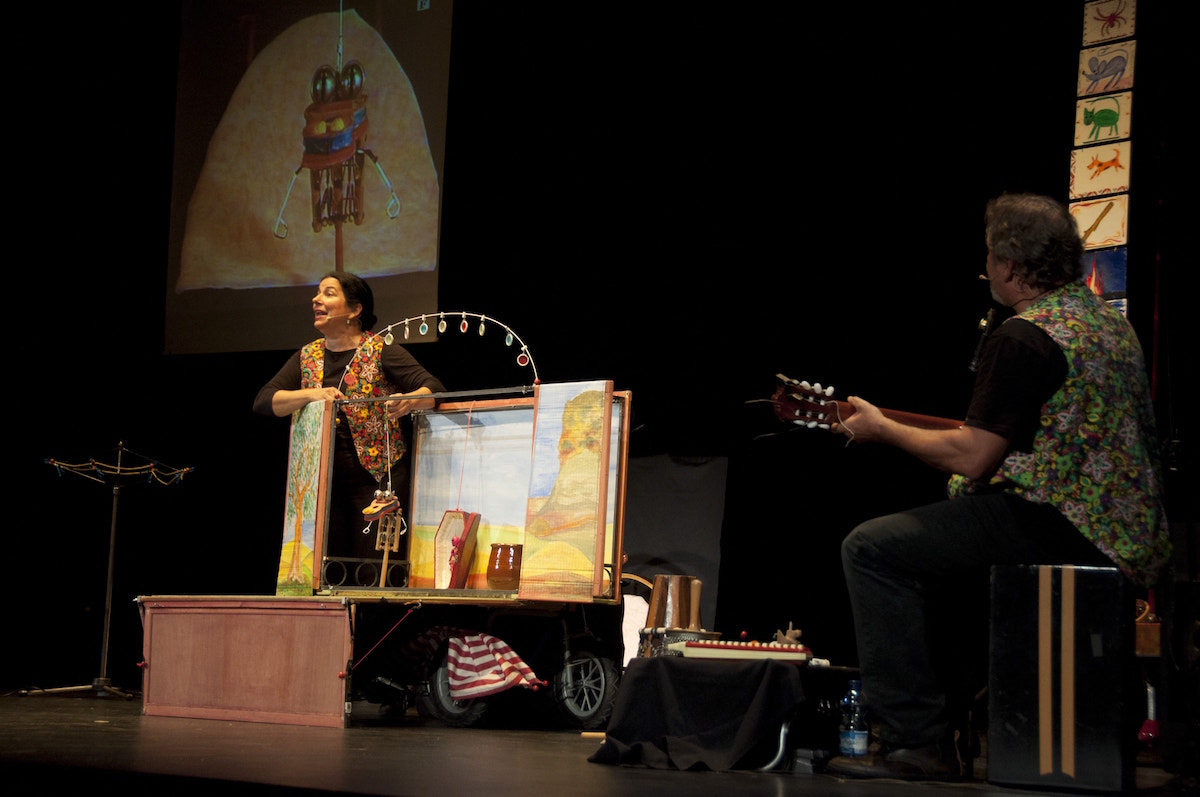
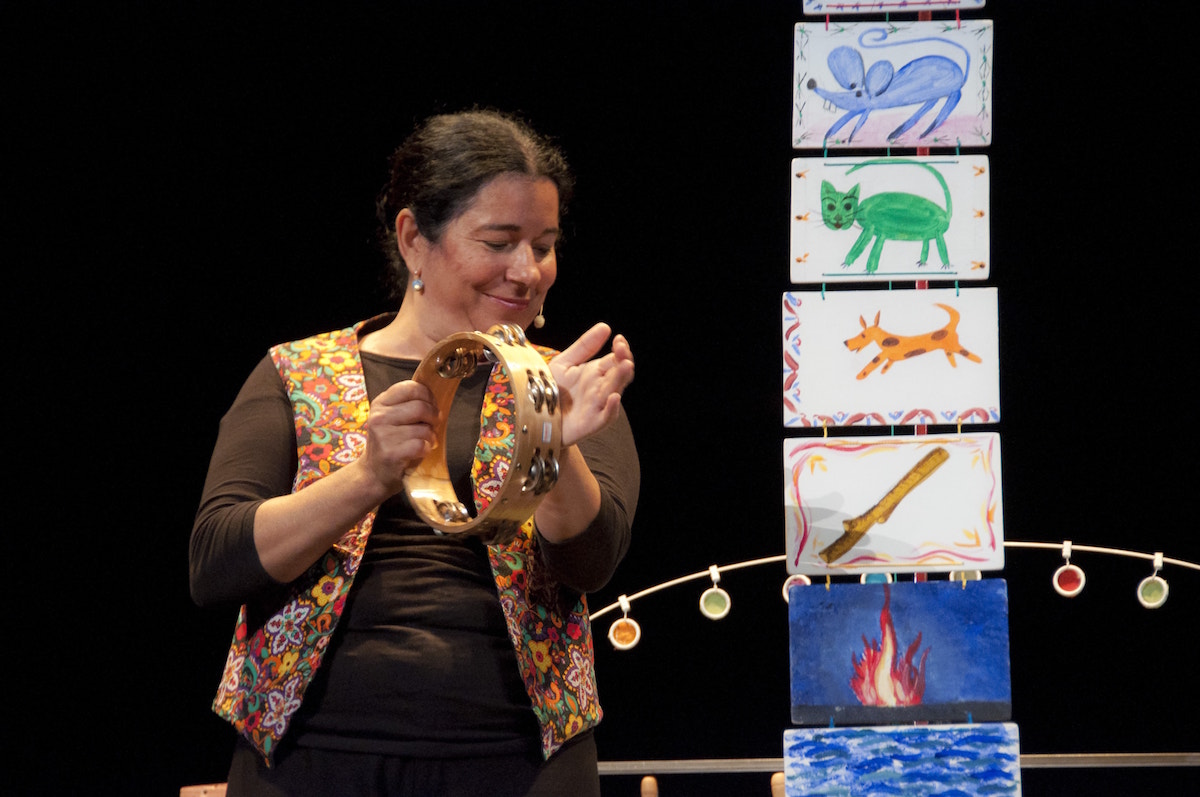
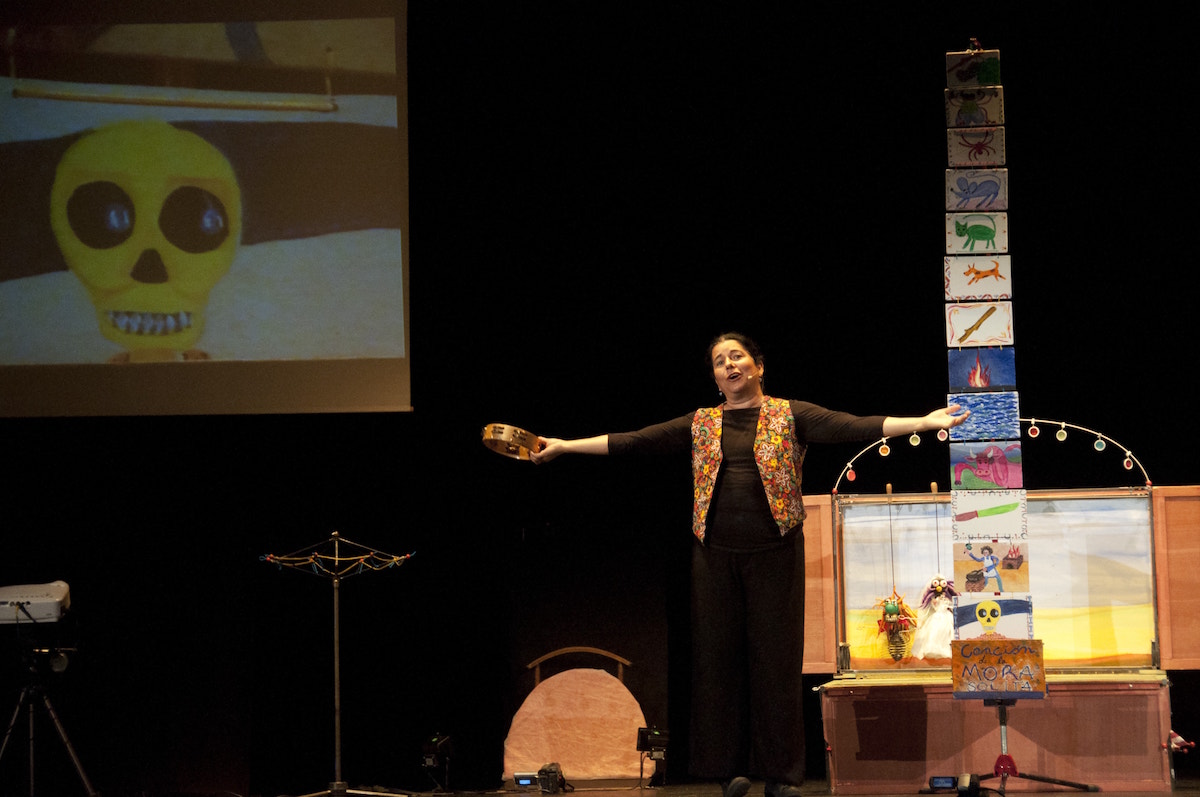
A companhia La gotera de la azotea, de Jerez, retoma a tradição oral festiva e a fabricação de marionetas de um único fio, elaboradas com materiais simples e reciclados (arames, sinos, guizos, molas de roupa), para compor uma peça aberta ao público, incorporando a participação das crianças através de uma sucessão – dramaticamente bem elaborada – de jogos e canções.
A história de La boda de la pulga y el piojo não é tanto a do casamento, mas a dos preparativos para celebrá-lo, a conquista de tudo o que é necessário, seres e bens, para montá-lo: um juiz, a madrinha, o padrinho, a música, os convidados, a comida e a bebida. E cada um irá contribuir com um presente, um jogo, uma pequena cena ou história.
Uma vizinha e um vizinho – o casal de atores intérpretes, manipuladores e músicos – entram e saem da história, deixando-se ver continuamente, passando de narradores a intérpretes fundidos na história, nas personagens. Sem deixar de ser, em última instância, o casal de marionetistas que monta e convida para o seu pequeno teatro.
Incorporam, subtilmente, também um pequeno toque tecnológico. Uma câmara que projeta ampliando a imagem num ecrã situado num dos lados. Permite ver em detalhe o pequeno boneco, personagem; ou recria o aparecimento de outro lugar onde, paralelamente, algo mais distante ou misterioso. A encenação escolhida deixa ver que, em espaços cénicos não convencionais, a peça funciona na proximidade perfeitamente sem o apoio tecnológico.
Como o ênfase e a lógica a partir da qual a peça se desenvolve estão na proximidade participativa — própria da tradição dos marionetistas, do teatro de fantoches —, o espetáculo utiliza sutilmente a tecnologia para a versatilidade; a passagem do pequeno formato para o grande ou sala.
A montagem não evita acertadamente a parte real, da realidade crua, mais inquietante, a morte, que muitas vezes, quando se trata de crianças, é evitada ou suavizada. Ela aparece na canção de La mora, em sua amoreira, tão sozinha, ou na figura de um convidado inesperado no casamento, um esqueleto rosa em seu caixão, sua caixa. É servida de forma desdramatizada, sem dissimulação, banalizada.De forma jocosa, a peça também não inventa um final feliz ao estilo Chim-pum, mas sim uma espécie de final aberto, ou adiado, que fala de forma saudável dos desejos insatisfeitos que se aprende a assumir sem protestos ou frustração.
Uma montagem que encanta as crianças e sabe valorizar a tradição e a simplicidade.
____ . ____
The company La gotera de la azotea, from Jerez, revives the festive oral tradition and the manufacture of single-string puppets, made from simple and recycled materials (wire, bells, rattles, clothes pegs), to compose a play open to the public, incorporating the participation of children through a dramatically well-crafted succession of games and songs.
The story of La boda de la pulga y el piojo (The Wedding of the Flea and the Louse) is not so much about the wedding itself, but rather the preparations for it, the acquisition of everything necessary, people and goods, to put it together: a judge, the godmother, the godfather, the music, the guests, the food, and the drink. And each one will contribute with a gift, a game, a little scene, or a story.
A female neighbor and a male neighbor—the couple of actors, performers, puppeteers, and musicians—enter and exit the story, allowing themselves to be seen continuously, moving from narrators to performers fused into the story and the characters. Without ceasing to be, ultimately, the couple of puppeteers who set up and invite guests to their little theater.
They also subtly incorporate a small technological touch. A camera projects an enlarged image onto a screen on one side. This allows the small puppet, the character, to be seen in detail; or recreates the appearance of another place where, in parallel, something more distant or mysterious is happening. The chosen staging shows that, in unconventional theatrical spaces, the play works perfectly well without technological support.
As the emphasis and logic from which the play develops are based on participatory proximity — typical of the tradition of puppeteers and puppet theater — the show subtly uses technology for versatility; the transition from small format to large format or theater.
The production does not shy away from the real, raw, more disturbing part of reality, death, which is often avoided or softened when it comes to children. It appears in La mora’s song, in her mulberry tree, so alone, or in the figure of an unexpected guest at the wedding, a pink skeleton in its coffin, its box. It is served in a non-dramatic way, without dissimulation, trivialized. In a playful way, the play also does not invent a happy ending in the Chim-pum style, but rather a kind of open or postponed ending, which speaks in a healthy way of the unfulfilled desires that one learns to accept without protest or frustration.
A production that enchants children and knows how to value tradition and simplicity.
Ideia Original, guião e direção: La Gotera de Lazotea | Músicos e Manipulação: Eva Serna e Juan Manuel Benito | Construção de Marionetas e Adereços: Eva Serna e Juan Manuel Benito | Produção: La Gotera S.C.

Input your search keywords and press Enter.